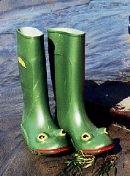
le plus loin le plus serré

le plus loin le plus serré
mourning art

in memoriam

"yet I tell you, from the sad knowledge of my older experience, that to every one of you a day will most likely come when sunshine, hope, presents and pleasure will be worth nothing to you in comparison with the unattainable gift of your mother's kiss." (Christina Rossetti, "Speaking Likenesses," 1873)

Sunday, February 26, 2012

Congratulations!!!

The Fantastic Flying Books of Mr. Morris Lessmore won the Academy Award for best animated short film!!!!

Many, many congratulations to William Joyce and everyone else who worked on the film - it's beautiful and clever and gorgeous and true. It absolutely deserves the Oscar (and any other awards that can be given, and maybe even some that can't).

The movie can be downloaded on iTunes FOR FREE! right now; the ebook/app is $4.99, but if you just want to watch 15 glorious minutes of exquisite bibliophilic animated film, you can do so for free. I cannot recommend this little movie enough.

I've been a huge fan of William Joyce's work for years and years, and I'm SO pleased that he's receiving recognition and prizes. His visual style is so wonderfully appealing to me - a kind of soft, round retro look that's loaded with curiosity and whimsy without ever, ever coming close to being twee. And he tells incredible stories; A Day with Wilbur Robinson is still one of my most favorite picture books. For a completely different tone from Wilbur Robinson, try The Leaf Men and Bentley & Egg. These are books that celebrate art and imagination and love and beauty and work and emotion - just as the short film does.

This is the second year in a row that a children's book author/illustrator has won Best Animated Short at the Oscars; last year's winner was Shaun Tan's equally glorious The Lost Thing .
Both films are thoroughly magical and inventive and are like looking inside a particularly fantastic imagination.

This is also a good year for Louisiana authors - William Joyce, and John Corey Whaley, who won the Printz for Where Things Come Back, are both Louisianans.

Go download the movie from iTunes now, for free, or go watch it on youtube or anywhere else you can find it.

Saturday, February 25, 2012

A Question of Perspective

For once I was somewhat ahead of the craze over The Hunger Games; I got hooked when Catching Fire was still just an ARC. This means I've had several chances to teach The Hunger Games, and each time has been - as teaching any book often is - revelatory.

Now, just a few weeks away from the opening of the movie - which I will go see, though I am nervous - I'm thinking again of some of the adaptational issues that worry me.

There's the obvious critique of reality television, of course, embedded throughout the series, but especially prominent in the first book. The betting, the voyeurism, the enforced spectatorship in the Districts, the pre-Games television circuit, the Gamemakers' work to create the most riveting Games - for the audience - all of that is, I think, important to the politics of the series, though not necessarily to the plot. But what happens when the critiques of that culture of spectacle has been transmediated by nearly an identical culture of spectacle?

The homepage for the film announces that the 74th Hunger Games are about to start. But they aren't; we're about to watch a film adaptation of a book published four or five years ago. Everyone knows that, of course, and it's almost painfully literal - after all, isn't it more compelling for the viewer to be drawn into the Secondary World of the books?

Actually, NO.

It shouldn't be.
Panem is an appalling place, filled with appalling people - either appallingly oppressed or appallingly oppressive and oblivious. We don't - we shouldn't - want to align ourselves with the people of that world at all.

And here's the thing that teaching the book made crystal-clear to me: it is ESSENTIAL that Katniss narrates. It may even be essential that she narrates in the present tense. The only way we as readers can avoid complicity in the horrific spectacle of the Hunger Games is to be inside that Arena, to be looking at everything through Katniss's eyes. Otherwise, we are voyeurs - maybe reluctant, unwilling ones, but we are watching the spectacle, we are guided by the media's editing, we are caught up in the excitement and the dazzle and the suspense. If we're out in the Capitol, or even the Districts, we are not innocent bystanders. If we're in the Arena, locked inside the head of a tribute, then we are not reveling in the spectacle of the Games; we're aware of, alive with, the fear and horror and difficulties and pain of the Games. And that's the part that's important.

And how do you translate, transmediate, re-present, first-person, present-tense narration in a film?
Since you can't replicate it exactly, how do you counter the effects of losing that perspective, the perspective that guides your affective response to everything that happens in the story?

This is what has been worrying me since before I knew there'd be a movie. In class, we talked about the narrative perspective, and how important it is that we see things from Katniss's perspective. A few people thought it would have been cool for Collins to split up the narrative amongst a few of the tributes - Peeta, maybe, Rue, perhaps?  It may have been a student - I honestly don't remember - or it could have been me who brought up the problem of being a spectator versus participant in the Games. And they agreed; virtually everyone agreed that locating the narrative perspective outside of the Arena would NOT be good.

So when I came across this tonight, I was horrified. Capitol Couture. "Whether you're a Capitol fashionista seeking inspiration for your latest look or a District citizen tracking rumors about the Tributes and other celebs, Capitol Couture is the only place to turn for pictures and news reports on the fashion, trends and lifestyle that make Capitol living so grand."

No. No. No NO NO NO NO.

We aren't meant to be Capitol fashionistas. We aren't supposed to want to know the rumors or the trends. To use an unfair analogy, this is like setting up a page about the latest trends and rumors in the Nazi capital Berlin. We aren't supposed to sympathize with the oppressive, privileged class. They're shallow, oblivious, voyeuristic people who excitedly watch children kill each other on television, cheering and betting and getting emotionally involved in the forced plotlines.

We don't want to live in the world Collins has created. It's a miserable place full of want and hunger and sadness and instability and violence. It's a place where children are selected at random to fight each other to the death on live, national television. Where these Games are celebrated, memorialized, commemorated; there is Games-tourism to past Arenas, there are products and styles and trends, there's a huge economy around the Games, entirely aside from the enormous political and social power of it. You don't even need to read Foucault's Discipline and Punish to see the way power and discipline are being enacted here.

This isn't Harry Potter, or Middle Earth, or Narnia; this is a broken, post-apocalyptic world. There is no subject position in that world that we can successfully inhabit; at best, we can want to see things through the filter of Katniss's selfish, stubborn mind. We don't want to be her. We don't want to hold a 12-year-old in our arms while that child dies. We don't want to kill anyone. We don't want to have to care for Peeta, always worrying that he'll die, that we'll die, that the final moment of crisis has arrived. We don't want to have to hunt to scrape together food for our families, hunt and sell the meat and still be hungry at night. We don't want to be pawns in anyone's Games.

But the studio (Lionsgate) evidently wants just that. They want us in the audience of the Games, laughing and gasping and gripping the arms of our chairs and betting and reminiscing.
They want us to be complicit.

And by doing this, by creating a spectacle that draws us in irresistably, they become, like the Capitol, wielders of power. And we become the Capitol people, we become the District people.

They give us bread and circus, and we buy advance tickets for the midnight opening.

I'm worried about this movie.

Friday, February 24, 2012

Flying Books and Academy Awards

An animated short film created by wondrous author/illustrator William Joyce is nominated for best short animated film at this year's Academy Awards.  "The Fantastic Flying Books of Mr. Morris Lessmore" is utterly gorgeous; it's got Joyce's clear stamp all over it, in the way whimsy appears (an illustration of Humpty Dumpty becomes a character, animated like a flip book) and in the round, retro style of the visuals. It, along with at least one other animation from Moonbot Studios (Joyce's company), were created as iPad applications, and thus are interactive narratives. Since I don't have an iPad (can't afford one, doing okay without), I don't know what, exactly, the app can do that the film doesn't, but it's there to be purchased for $4.99, well worth the price. the iTunes store listing is accompanied by truly glowing reviews of the app/film.

William Joyce has been a favorite of mine for years and years, ever since A Day With Wilbur Robinson. I've been collecting his books since at least my early college years, I've watched George Shrinks and the unspeakably adorable Rollie Poly Ollie (I also may or may not have stuffed versions of Ollie and his sister Zoe). I was - and still am - delighted that this short film exists at all, and that it's been nominated. It would make an amazing winner, especially following last year's equally glorious (and author/illustrator of children's books-based) The Lost Thing, a filmic version of Shaun Tan's book of the same name.

The Fantastic Flying Books needs to be watched, and I won't oversummarize - suffice it to say it is "about" Hurricane Katrina and storms, literal and metaphorical, and creation and creativity, imagination and art, loss and grief, happiness and joy, and above all, books. This is the kind of book-built world that bibliophiles and, I think, those of us who love  children's literature in particular, dream of.  The animated Humpty Dumpty in his book of nursery rhymes is especially resonant for those of us who live in and among children's books, particularly older, worn editions.

It's a silent film - the score is reprise after reprise of "Pop goes the weasel," a tune which takes on, incredibly, sad, mournful, griefstricken tones (along with richer, more hopeful notes). There's not much text in this, despite being about books; everything we need we see in lovely shapes and colors and expressions. The unbelievably emotive Humpty Dumpty is worth the watch just for himself; the life that's created in him, in his book-ness, is spectacular. Humpty Dumpty makes visible the truth that all readers know, that books are friends; we see, through him, how his human reader is truly Humpty's friend as well.

Joyce lives in Louisiana, and the film was made entirely in-state; it is dedicated to Coleen Salley and Bill Morris, both very important figures in the world of children's books, storytelling, publishing, and literacy. It is also, as the final "page" of the film tells us, in memory of Mary Katherine Joyce. This last bit of information, when I encountered it, was crushing; I immediately remembered my William Joyce Scrapbook, which includes mention of Joyce's children - Jackson and Mary Katherine. A tiny bit of googling reveals that Mary Katherine died of a brain tumor in May 2010, at age 18. Though the film is moving enough as it is - no, really, keep your tissues handy - knowing this makes the presence in the film of two girls - one a young woman, one a child - a little more meaningful.

I don't place much importance on the Academy Awards, as a rule, but I would be overjoyed to see this win an Oscar; it's an amazing accomplishment, a love-letter to books and reading in the form of a film.

Thursday, February 16, 2012

prize-winners and honorable mentions

This year I was on the stick with the children's/YA media/lit prizes. I checked the list of prize-winners when I got up on 23 January, and immediately put in  library requests for a number of them. They've been arriving in dribs and drabs, and I've been reading them that way, so this is a bit of a haphazard roundup.

Newbery Winner: Dead End in Norvelt, Jack Gantos.
Gantos is awesome, for about a hundred reasons not least being Rotten Ralph, who I have admired since my childhood. Unsurprisingly, I hadn't heard of Norvelt before the awards announcement; I am out of the loop, the real inner circle of readers and Important Book People who get ARCs and/or are able to afford new releases.
I liked Norvelt, but I didn't love it. It says good things about history, and story, and community, and memory, but not unusual, extraordinary things, and it doesn't say them in ways that felt truly unusual and extraordinary. I want my Newbery winners to be books that either make me cry, or dazzle me with their structure, language, characters, plot.  Dead End in Norvelt, like Moon Over Manifest, last year's winner, did neither of these things.

Printz Award, Where Things Come Back, John Corey Whaley. 
I wrote a post about this one already, but I realize I feel pretty good about this being the Printz winner. I'm not sure what else should/could have won, unless it's Catherynne M. Valente's The Girl Who Circumnavigated Fairyland in a Ship of Her Own Making, which - because I just re-read it again, for teaching - strikes me as a book VERY deserving of an award or two. Perhaps I will invent my own award and give it to the book.

Printz Award Honorable mentions!
Scorpio Races by Maggie Stiefvater.
Very recently Stiefvater was one of a number of YA authors asked which YA text they'd most like to see adapted as a film, to wich she replied How to Say Goodbye In Robot, which horrified me - that book is perfect, utterly perfect, as a book. Anyone who attempts to adapt it for any kind of even marginally mainstream audience will ruin it, which makes me question Stiefvater's judgment. I was also skeptical of this initially, because I associate Stiefvater with *Shiver* and the genre of paranormal romance YA in ways that are not flattering. I haven't read those books, and I still might not, but people who are smart and thoughtful readers mentioned Scorpio Races in positive ways, so when I saw it on the honorable mentions list, I thought: Why not?
As so often happens, I'm glad I did read it, because this was quite an enthralling book. I love the dual narrators - Sean and Puck/Kate - who inhabit such initially different-seeming worlds even on the same small(ish) island, both of whom have unique voices and personalities. Sean is horse-obsessed, especially with the capaill uisge, the water-horses that come from the sea surrounding their island. I had to look up capaill uisge, and then spent the next ten days racking my brain to recall where I'd recently read about glashtyn, with which they are essentially synonymous [answer: Girl Who Circumnavigated Fairyland].  The Scorpio Races are a yearly event, racing along the beach on the ferocious, mostly feral and carnivorous capaill uisge; someone always dies in the race, it seems, and others are hurt. Sean works as a trainer for the wealthiest man on the island; Puck is the middle child of three who were orphaned recently when their parents were attacked by capaill uisge while at sea.
There are any number of twists and turns involved in getting Sean and Puck into the race, and then into contact with each other, but it's so well-crafted and captivating. Stiefvater's setting, a clearly remote, dark island with its own customs, traditions, ways of being, is wonderful; it's definitely Celtic in feel, but is fictional, which gives her free rein to world-build. This is essentially a two-in-one romance plot and boy/girl-and-her-horse plot, and the two complement each other beautifully. The romance feels utterly convincing, almost painful, slightly strange, slightly inevitable, fierce as everything else about these two characters are. It is never cloying, or sentimental. Despite Puck and her brothers being orphans, their sorrow and situation is never pitiful; rather, it's an obstacle and an element of change that they all must grapple with (and do so rather poorly, which strikes me as utterly realistic given their ages - something like 19, 16, 13).
The ferocious nature of the capaill uisge is made abundantly clear, repeatedly, but at the same we're always able to see them through Sean's (and Puck's) perspective; they are forces of nature to be held in awe and respect, not terrible monsters to be vanquished. Like thunder storms or sea swells, the capaill uisge are there whether you want them to be or not; how you choose to respond to them is everything.
There are a number of secondary and tertiary characters, and Steifvater does a fantastic job of keeping them all within human bounds; even the characters we don't see a lot of, like Peg the butcher's wife, are complex and real and interesting. There is no real "villain" in the tale; the stableowner and his son say and do aggressive, terrible things, but we also see enough of them to know why they do these things.
Scorpio Races surprised me in how very much I liked it; it's a story about love that isn't a "romance," it's a story about horses that isn't a horse book. It's gloriously evocative of an utterly devastating place and people, and it's completely deserving of its Honorable Mention.

Printz Honorable Mention, Jasper Jones by Craig Silvey
THIS was a letdown. Silvey's Australian, and I've come to be deeply impressed with contemporary Australian YA (Melina Marchetta, Markus Zusak, Simmone Howell), so I had some high hopes. I wrote about this on my Goodreads page, and I'll just reproduce that here:
This is not a bad book, but I do not - I truly do NOT - understand why it is a Printz honorable mention. It is very possible I'm biased because I read it in my project to read the awards books & honorable mentions; maybe if I'd picked it up by chance, I'd have liked it more. But not much resonated with me as a reader; not the plot, which seemed deeply implausible, not the characters, who were either stereotypes or bafflingly inauthentic. Charlie, the narrator, never sounds like a 13-year-old boy, not even a precocious one, except in a few snips of dialogue with his friend when they call each other dickhead. Jasper Jones is a ridiculous kind of shadowy cartoon of a boy, who doesn't speak like a teenager or act like one, and not because of the circumstances of his life. Charlie's dreamy devotion to Jasper at the beginning of the novel is interesting, and it would have been super-interesting to follow THAT path - why not have Charlie crush on Jasper, since it seems he's halfway there already? The sideline about famous murderers/serial killers is also interesting, especially in tandem with the search for the missing girl, but it ultimately doesn't go anywhere either. So much is left undeveloped, and not in a way that feels intentional and shadowy, sketchy like the real world; the core premise that Jasper is so much a target that a 13-year-old agrees to hide a body never feels plausible, especially not when Charlie rhapsodizes about Jasper, and explains how great he is at football, and how the girls love him.

The language of the book feels all wrong, too. It isn't BAD, it just doesn't seem right for the kind of characters, for the kind of story, that's being told here. I hateHateHATE saying things like this, but *Jasper Jones* really feels like it was aiming at being an Important Grownup Novel about Coming Of Age, but slipped and fell on its ass on the YA shelf. I think this could have been a good book, but something went awry, and Charlie wandered away from being a teenager to being a rather empty and pretentious plot device.

I really don't understand why this was named Honorable Mention. It's gotten good collective reviews on amazon and goodreads; maybe I'm just missing something, or maybe I expected too much? It's possible that I've also now read a goodly amount of truly astonishingly great YA fiction; the bar is set very, very high.

Printz Honorable Mention Why We Broke Up by Daniel Handler
Because I'm out of the loop, I didn't see this one coming; I didn't even know it existed until a week or two before the awards were announced. I love Daniel Handler, and try to keep tabs on him, and I also love Maira Kalman, who did her usual wondrous illustrations for this novel; how it escaped me is kind of mysterious.
I read this in one setting, and I quite liked it. Min is a delight, and she manages - as the story evolves - to be both a unique teenage character ("different," or "arty," as the text suggests and Min resists) but to also be completely a teenager. Min's love of old movies (all of which I believe Handler invented for his novel, and I give him massive props for that, because they are referenced constantly, sprinkled  throughout Min's letter precisely the way you do continually connect real-world moments to film scenes) and her personality in general made me think, oddly enough, of Ruby in E. Lockhart's Boy Book and its companion novels - but not badly.
The premise of the book is fantastic - Min is returning the detritus of their relationship, which lasted for about six weeks (yes! they are teenagers! in high school! this is how it is), accompanied with a letter explaining the significance to her of the item, and also the significance of it to why she broke up with Ed, the basketball-star popular boy senior. I love material culture, and I love thinking about material culture, and like Min, I imbue objects with meaning and associations more than perhaps I should, or more than most do.
Min is a smart cookie but not overly smart; she's engaging, she's interesting, she's able to describe their relationship in great ways. For all we suspect Ed - we know, after all, from the get-go that this relationship isn't going to last, and Min is angry at him - Handler manages to present him as likable, truly likable, so when the final shattering reveal comes along, it's wrenching to the reader on many levels.
A lot of people have raved about Handler's ability to channel a sixteen-year-old girl, and I suppose he does throughout, though the kind of girl he channels is one that lives in a hazy third space; Min is not a girly girl, and her closest friend is a boy - the space Min occupies in her world is not that of many, or most, girls in the "real world," at least not in my experience. But Handler does a devastatingly good job when he gets to the actual crushing moment of breaking-up. A nearly three-page paragraph, a semi-stream-of-consciousness burst of emotion, almost at the very end of the book, makes Min heartbreakingly real and representative of, I think, a lot of girls and women when their hetero relationships end. A sample:
"I like movies, everyone knows I do - I love them - but I will never be in charge of one because my ideas are stupid and wrong in my head. There's nothing different about that, nothing fascinating, interesting, worth looking at. I have bad hair and stupid eyes. I have a body that's nothing. I'm too fat and my mouth is idiotic ugly. ...I scratch at places on my body, I sweat everywhere, my arms, I clumsy around dropping things, my average grades and stupid interests, bad breath, pants tight in back, my neck too long or something. ... I'm not a romantic, I'm a half-wit. Only stupid people would think I'm smart. ... The only particle I had, the only tiny thing raising me up, is that I was Ed Slaterton's girlfriend, loved by you for like ten secs, and who cares, so what, and not anymore so how embarrassing for me." (336-337).
Min's sense of failure, of loss of self-worth, of helpless hopeless stupidity, reminds me of virtually every girl I've ever known (including myself) who has had a relationship end even a little bit badly. That feeling of the only thing raising you up being the boy - that right there is so true, and even the most well-adjusted feminist women I know experience this. I don't know, because I can't know, if this is how boys and men feel when they're on the bad end of the break up, but I do know that I can't think of any representations of this (in literature). It makes me think, reading about Min from a safe distance of I'm not sixteen anymore, that we still fail girls and women in our culture; we still make them think that value comes from having a guy, especially a successful guy. Even though Min doesn't wallow for long, even though she manages to pull it together, this feeling of no-worth-without-him is still strong when the breakup happens. I have read books with male narrators and protagonists who express horror, sorrow, dismay, loss, grief, listlessness - all kinds of emotions - when faced with their girls and women leaving them. But I don't think I have ever encountered one who responds with the kind of self-loathing that we see here from Min, that I have seen from all kinds of girls and women I know (including myself).
For these three pages alone, Daniel Handler's book is deserving of at least an Honorable Mention.

Friday, February 10, 2012

Where Things Come Back

Several years ago, there was a story on NPR about the ivory-billed woodpecker's seeming reappearance after "extinction." The woodpecker popped back up in Arkansas someplace, according to a couple of credible sources, and so NPR and every other media outlet on earth did stories. Small town in Arkansas, somewhat economically (re)vitalized by appearance of extinct bird!  NPR's story focused on Sufjan Stevens, who - at least then, in June 2005, was attempting to write and release a record for each of the fifty states; NPR had Stevens go to Arkansas and documented his writing process for what became the song "The Lord God Bird."
I listened to this story in my car, driving from some Pittsburgh Point A to Point B; I was mesmerized by the possible re-emergence of an extinct animal (because I am interested in evolutionary biology, and extinction, because I have read David Quammen's Song of the Dodo at least four times).
After hearing this story, I read up on the ivory-billed woodpecker, and downloaded some Sufjan Stevens songs (of which "Flint" from his Michigan album is my favorite).

John Corey Whaley also heard this story, and wrote a Printz-award-winning novel.
Thus two roads diverge.

Because, despite my best efforts, I remain annoyingly out of the very-current-releases loop, I hadn't heard of Whaley or his book until the awards were announced last month. Like the good booknerd I am, I checked the award lists as soon as I got up that morning, then promptly requested a stack of them through my public library's interlibrary loan system.

Yesterday, Where Things Come Back was ready for pickup from the library; yesterday I got it and read it, very nearly in one sitting. It's a slim book, but not skimpy; it just moves - or rather, draws in the reader - quickly and completely. There is deceptively sly flap copy, which made me think, especially once I turned to the second chapter, that perhaps I was holding in my hands something along the lines of Calvino's If on a winter's night a traveler.  I wasn't, not exactly, but the book I did have was wonderfully, beautifully, intelligently crafted, with competing narratives that unwind gradually into single arc. The teasey flap copy made me hyper-alert for any and all postmodern trickeries, of which there aren't many (if any), and I resent that, because it took a small bit of my attention away from the real book (not the one the flap copy, and my brain, imagined).

If Where Things Come Back has any flaws, it's in the overly-intelligent and sensitive narrator - Cullen Witter - a common-enough failing in any number of novels for and about teenage boys [Rarely does one see an overly-intelligent and sensitive female narrator who rings true as a female narrator; this needs to be thought about, because I may just be exposing a massive bias of my own]. The moments when Cullen is distracted, seemingly annoyed, by attractive girls offering him sex felt most improbable; I have known too many overly-intelligent and sensitive boys myself, all of whom have made clear to me that their 17-year-old selves would never have been able to turn down those kinds of opportunities.
Cullen's a bit tricky to peg - he presents himself, initially, as something of a loner, possibly misanthropic, an outsider who writes in a notebook, who spends most of his time with his two-years-younger brother - except we learn that Cullen's best friend is Lucas Cader, who is well-liked, kind, popular, athletic, attractive. And then we learn that Gabriel, Cullen's brother, is the real eccentric: Gabriel spends all his time reading or listening to music no one's ever heard of (Sufjan Stevens included here). I'm still not sure what to make of, or do with, either Cullen or Gabriel: both are immensely interesting and quite likeable characters, but I feel like I don't know quite enough about either. This could be a flaw in the novel, or it could be a strength: has Whaley created such compelling characters that I'd want to know more about them regardless of how much backstory he provided? [hint: the answer is probably yes. I'd like to read a book narrated by Gabriel. He's just my kind of boy/narrator - if he wasn't 15, I'd have a regular old bookcrush on him].
There's an ivory-billed woodpecker stand-in, the Lazarus woodpecker, an opportunistic man who discovers (?) the continued (?) existence of the bird, there's the small town that capitalizes on the bird-given fame (the Lazarus burger! the lazarus woodpecker haircut! and so on). There's a beautiful girl who never actually gets her character developed; there's a less beautiful girl who does, and becomes quite interesting for it [Gabriel's book could include her; they could be friends, but absolutely nothing more].
There's the larger, stronger plotline: Gabriel disappears. Cullen and his parents drift around for eight, nine, ten weeks while Gabriel is gone. The impossibility of that kind of loss, which is never true grief because missing suggests both life and the possibility of being found, but the longer Gabriel is missing the more likely it seems that he is dead. Meanwhile, the bird is getting all the attention: photos, posters, articles, newsreports - everyone is looking for the bird.

Alternating with Cullen's narrated chapters is another story, which becomes a set of stories which slowly, gradually - and very artfully - interlocks with Cullen's narrative. It's easy for that kind of device to become a gimmick, or at the very least a bit of unnecessary narrative virtuosity, but Whaley somehow manages to make it feel absolutely, flawlessly right. It's a slow reveal, the way the pieces fit together, but it's not a mystery, and it's not poorly paced; we know that eventually the story of Benton Sage and Rameel and Cabot Searcy and the book of Enoch will mesh with the story of Gabriel and Cullen and Lucas Cader and the bird.

There's excellent attention to detail in this novel, tiny details about notebooks and cereal bowls being cleaned, that give a richness to the world of the book. The oddball characters - Fulton Dumas, for one - wear their literary oddity well; they're not there to be quirky or charming, they are there because oddballs are there. The world of the book is a fully-realized one that is simultaneously charming and repulsive; charming, in its richness and depth and small-town-ishness and strains of hopefulness; repulsive in the horrors and fears that are so easily set off and so hard to get rid of.

The more I think about Where Things Come Back, the more I wish it was a longer book; I want more detail about the characters, I want to watch them do the things they do, I want to know why they do what they do. Cabot Searcy's progress is mapped out for us, slowly and relentlessly, and he makes psychological sense to me, but I don't know, say, Ada or Alma nearly as well. I don't need to, for the book to work (and to work well); but I want to, because Whaley's a good writer and his cast of characters are intriguing.

Worth noting: the friendship between Lucas Cader and Cullen Witter is quite an interesting one. Again, there's a lack of depth that is actually narrativized; at one point Cullen flat-out asks why Lucas is his friend, and Lucas's answer fills less than one line of text. But Cullen's attachment to Lucas set off all of my queer-detectors - though he states, more than halfway through the text, that he loves Lucas "in a very nonsexual way." Early on, Cullen disrupts his own daydream to insert Lucas as the ultimate hero/rescuer, and all of his descriptions, his representations, of Lucas are at least faintly tinged by a kind of queerness. [Cullen mentions, briefly, the homophobic names he's called as an unathletic, smart male, then moves past that; I note, again, that queerness and gayness are not the same thing]. The male relationships in this book would be worthy of their own novel (or two or three) and maybe a critical companion as well; the connections and affections amongst Cullen, Gabriel, and Lucas are complex and layered, and not at all what I'm accustomed to encountering from male-protagonist YA fiction. In my personal, stupidly complex system of card-cataloguing, I might set Where Things Come Back alongside Will Grayson, Will Grayson as a "male friendship/brothers" theme of some significance. I'd also place this - cross-indexed, of course - with any texts from the perspective of a somewhat worshipful older brother. Older siblings tend to either be absent - if they aren't the heroes of their novels - or merely annoyed by the existence of younger siblings, if they are the protagonists. Siblings are functions, not characters (obviously there are massive exceptions to this), but in this novel, both brothers are full-fledged characters.

One of my favorite touches of Where Things Come Back (aside from the major touch of being able to weave together seemingly disparate items, characters, events into a glorious whole) is Cullen's narrative trick of displacing himself via third person. He writes things like "When one enters his kitchen to find his mother, father, and best friend all seated in front of a stack of uneaten pancakes, he knows that something strange has happened" (84). The shift from "one" to "his," from the seemingly impersonal imperfect to the very personal present tense, is such a delicious narrative trick that I don't even know how to talk about it intelligently. Something about it gave me (gives me) figurative goosebumps; that slippage from impersonal to personal, from a coolly detached perspective to the gut-twistingly personal and immediate. I don't want to ascribe this to "boy sneakily shows emotions while pretending not to have emotions," because that is a kind of gender essentializing I want to avoid [though it does have that representational quality]. Instead, maybe it's simply narrator attempting, vainly and valiantly, to talk through the things that are most awkward, painful, uncomfortable. The novel's frequent mentions of Dr. Webb - who we never do meet, and who seems to be a psychiatrist or therapist - hearkens back to old H.C. in The Catcher in the Rye (because no one can write a YA novel, or any novel, about a less-than-happy adolescent male without THAT comparison cropping up); there's a sense, as in Catcher, that this story is being told for, or at the suggestion of, someone else, someone who isn't the reader or the narrator. Leaving that mystery unsolved, unresolved, is one of the little gifts of this novel, one of many, many little gifts scattered throughout its pages.

Thursday, January 19, 2012

was this really the best they could do?

I'm no longer watching Glee; it got too absurd, too annoying, too inconsistent for me to handle any longer. I'm still very fond of Chris Colfer, however, and his character Kurt, and so I was anxious when I heard that he was publishing a work of fiction for younger readers. Colfer's a talented and smart kid, but he's also very young, and whoever is bringing out his book is obviously capitalizing on his popularity on Glee. This doesn't mean it can't be a good book, or won't be, but I'm dubious (and, because I like Chris Colfer, this dubiousness brings with it a lot of concern - I want him to succeed, I'm just doubtful).

At any rate, this week the cover image and publication date were released. Little, Brown moved up the release date - originally scheduled for 7 August, the book will now be out on 17 July (incidentally, Disneyland's birthday, for those keeping track).


The moment I saw this, I felt confused, and it took my brain a moment to register that I was looking at the image of Colfer's new book. Then I went straight to google image, and looked up John Stephens's The Emerald Atlas.

Clearly, not identical, but rather similar just the same, no? Focus especially on the landscape - the castle, the backdrop of the child figures. One is green hills, the other rocky waterfalls, but again - very, very similar.

I don't think this is a rip-off, not at all, but it did make me ask: Is this really the best they could do? Little, Brown couldn't design a better - or rather, more original - cover?
Shows a decided lack of imagination. Little Brown, your designers are not working to their full potential. I hope.

Tuesday, January 03, 2012

John & Hank Green [should] Take Over the World; or, A Modest Proposal

The final part in my three-part series on the awesome power of Nerdfighteria and its benevolent "rulers," John and Hank Green (who aren't rulers, really, since it's more of a collective community, but they are a central magnetic force drawing in the nerds). I'm sure the world has been waiting eagerly for this long-delayed final post; it's a long one, so make yourself comfy.

First, a tiny update: a few days ago, John Green tweeted that the Nerdfighter group on kiva.org has now loaned over $150,000 in microloans. I'm not sure exactly when the numbers here started to boom, but it's been in the last six months or so. Again, a reminder that the majority of Nerdfighteria are young people - say, under 21 years old.

On to the Problem: When I was in high school, in my senior year I got interested in students' rights as a result of an amazing history teacher and the appallingly thwarted efforts of some friends to form a public Gay-Straight Alliance. For a long while thereafter, I seriously considered attending law school, with an eye on either civil rights or student/young person-related law. Obviously, law school went by the wayside, but for any number of reasons - including the fact that I specialize in children's and youth culture - I'm still quite interested in the plight of young people.

In some ways, this is a First World Problem: the disenfranchisement of under-21s (or even under-25s) is not quite on par with sub-saharan starvation crises, with southeast Asian political fighting, with South American paramilitary activity. At the same time, if we judged every cause by its relation to more dire causes, we'd be stalled out with inertia. Just because something is a First World Problem doesn't make it not a problem. Perfectability of society is a thing that should belong to all people, regardless of where they live.

Young people ARE disenfranchised. They are experiencing unemployment at higher rates than the general population, sometimes by as many as 3 or 4 times . 
Young people under the age of 18 pay taxes - sales tax, and if they DO have jobs, in the form of payroll taxes for Medicare and Social Security. I started working at a Hallmark shop in a mall when I was 16 - I worked there for more than two years. In that time, I paid in hundreds, if not thousands, to Medicare and Social Security, yet I had absolutely NO voice in how that money was regulated, disbursed, etc. Then, as now, there was a fair amount of political chatter about making changes to both programs; chatter I followed, because I was and am a nerd, but which I was not able to participate in, despite being an American worker paying taxes. This - taxation without representation - is one of the biggest forms of disenfranchisement that under-18s face, and I think it's a significant one. After all, Taxation Without Representation was one of the central causes of the American Revolution, was it not? [debatable, but in popular mythology, still important]

Then we get to other issues: the drinking age, which weirdly supercedes the age at which one is a legal citizen. The arguments for lowering the drinking age to the age of legal citizenship (i.e., age 18) are various, but one I find especially compelling is that it could creation an altered culture around drinking, reducing things like alcohol poisoning and alcohol abuse among teenagers and college students.
The linkage of college financial aid to male enrollment in Selective Service (which is, frankly, creepy and a kind of forced enscription).

The very large, and increasingly more troubling, problems of student loan debt - partially highlighted through the work of the Occupy protesters - is another area of disenfranchisement for young people.


Then there's the fact that the United States, alone with Somalia, refused to sign the United Nations Convention on the Rights of the Child. Amnesty International includes this very telling explanation of Somalia's failure to sign: "Somalia currently does not have the governmental capacity to ratify an international treaty at this time."
Primary objections include fears that the Convention would reduce parental authority, lead to lots of abortions, and result in children making their own (!) choices about religion. Two other issues loom in the background of the Convention: child soldiers (yes, weirdly enough: evidently, American 17-year-olds, who are legally children in the view of the convention, can join the US military) and capital punishment for juveniles.

This leads directly to the next item on the disenfranchised list: trial, imprisonment, and sentencing of minors as adults. This is an issue I feel very, very, very strongly about; regardless of crime, I do not feel any child (even a 17-year-old) should be tried as an adult. I would completely support altering penal codes to deal with juvenile offenders; at the moment, it's an all-or-nothing system, which frees teenage criminals when they reach majority, or which treats 12-year-olds like 45-year-olds in the eyes of the law. Neither is satisfactory.

A much smaller issue, but one I think is representative in some important ways of the way the issues of younger people are simply ignored, is the Car-Rental Dilemma. Even if you're the safest driver on earth, if you're under 25, you must pay a premium (usually a very high premium) if you want to rent a car. I have never been able to understand how this isn't illegal discrimination (and I've researched it at some length, but still my brain refuses to process it).

So what is the solution? What's the Proposal?

A powerful advocacy group. A lobbying and activist group on par with the AARP - the American Association of Retired Persons. Membership in that group is essentially automatic. I would model my group broadly after the AARP. I might even borrow their acronymic principle: Why not the American Association of Young People, the AAYP?

One of the criticisms of Kids These Days is their political apathy. I don't see this; most of the younger people I come in contact with do have at least a thin thread of interest or passion about some aspect of political and social life. They're just so thoroughly disenfranchised that they don't exert themselves. In the parlance of one of my favorite podcasters (Merlin Mann), young people have no skin in the game. In fact, they're excluded from the game almost entirely. They want to play, but no one's giving them a leg up.

I dislike, very strongly, the way lobbying operates in American government. I'd love to see that changed dramatically. I don't think this will happen any time soon. Until such a time when powerful lobbies aren't needed, I think it's vital that young people have one. The AARP is strong. It is one potent group of voters. There may not be as many young people voting - I'll limit my group to, say, ages 25 and under - but there are still a lot of them.

And no one speaks for them.
No one in any position of real political efficacy gives one shake of a dead rat's tail about the needs and wants of that age group. And I think that needs to change. The way to make it change is to form a group so numerous and vocal - and let's face it, financially strong - that the media, then the politicians, must pay attention to it.

This is where John and Hank Green come in. They have a large and broad platform from which to speak. John has over a million followers on Twitter. The two have repeatedly been able to marshal the forces of Nerdfighteria to undertake any number of causes, including lending and giving literally hundreds of thousands of dollars. Yes, this is small potatoes in the context of larger political contributions, but I would argue that it represents a much larger "sacrifice" or percentage of income given than one sees in the population at large.

I've been daydreaming about my AAYP for years - ever since high school, when our GSA was reduced to dust, when I learned about PACs, when my folks explained to me how much power the AARP had. One of my huge stumbling blocks, when I try to think how such an organization would be formed, is the need for strongly magnetic, charismatic leadership that would draw in young people. A kind of celebrity spokesperson(or persons), but ones genuinely and truly committed to the cause of increasing the power and influence and respect for young people in this country. There aren't many of these sorts of people in the pages of People magazine.
But John and Hank Green are precisely the kind of people who would work beautifully as loci for a young people's movement. Both are intelligent and very articulate; they manage to be serious and funny simultaneously. They're able to compress information into tidy short packets or nuggets; they can do soundbites and catchphrases like nobody's business. They've clearly mastered the use of the Internet for social networking, charitable work, and general community-building. Both have connections in other fields: John, of course, in the world of books - teachers, librarians, publishing, and Hank in science and entrepreneurship. Those teachers and librarians are an invaluable resource, because they're working with a good portion of the young people in question, and a great many are committed to the welfare and well-being of young people. Yes, they're nerds, but they are also able to speak across a range of nerd-groups: readers, artists, scientists, musicians, computer geeks, video-game-enthusiasts, lego nerds, sports fans (yes. John Green maintains a twitter account for his commentary on sports - @sportswithjohn). They already stage an annual con.

I don't think for one moment that they should be the driving force behind this - essentially, I would pick them as the networking hub. Young people ought to run the show - there's plenty of unemployed, or underemployed, college graduates out there who could do a great job of branding, marketing, coordinating, doing whatever it is one needs to do to set up an advocacy organization.  Clearly, older people - especially those with experience in such things - would be needed as well, but I would want the heart of the organization to be younger people. The core board and directorate would be largely under term limits - say four years. Then new folks would come in. You'd have to have some unchanging people, of course, for continuity, but keeping the main players both fresh and young would ensure new ideas and relevance - if you continually recruit young people into the organization, you'll always have people on hand who are totally up-to-date with the current state of the younger world.

I just love the idea of young people being represented more thoroughly in the halls of power. Can you imagine a group tasked with advocating for young people taking on issues relating to education? or student loans? I am pretty sure there was no one at the table looking out for 22-year-old recent graduates when any and all student loan  regulation was put in place. 

It would be a lovely thing to give power to the young people. AAYP - or whatever you want to call it - for and by the young people of America - it would be a glorious revolution.

Saturday, December 31, 2011

boys who want to dance

Over the winter break, I went home where there is cable television. Somehow, my mother and I ended up watching - late at night - part of a marathon of the execrable "Toddlers & Tiaras."
The show is one I have seen once or twice before; when it first appeared, I made a point of seeing an episode or two, since it falls right within my purview as a person interested in representations of children (and sexuality, and exploitation of children, and on and on).

A kind of slack-jawed, horrified inertia kept us watching through glitz-girl tantrum after tantrum, but the remote was poised to switch it off when a new episode came on. But hold that thought! Because this upcoming show includes a previously-unseen entity in the show: a Pageant Prince.


The boy in question is 7-year-old Brock, from podunk-nowhere, and he is fabulous (in every sense of that word).  Brock just loves to dance - he says he's a diva, he loves the sparkle, he has two American Girl dolls who are his friends when no real friends are around (he brings the dolls to at least this one glitz pageant). He shows off some fierce jazz hands, and informs the camera that he wants to go on Broadway.
His mom - despite the fact that she dresses up Brock's very small sister in those heinous pageant dresses and makeup - seems to be great. She says that she and his father support Brock 100% (I wish we could see the father, to be honest). This - the dancer, the pageant boy, the drama queen who loves the spotlight - is Brock, his mother tells us; it's who he is and they love him, and anyone who has a problem - well, they don't need to be around us.

Of course most of the clips of the mom's interview are defensive-seeming, especially all strung together; the show makes it pretty clear that Brock is "unusual," that we are seeing something different that needs to be explained and justified in great detail. Yet we also see Brock onstage, being introduced (he's the only boy in the entire pageant) in a suit with sparkly lapels, and then dancing - his real passion is dance, and his mom tells us his routines are partly planned, partly improvised. Watching him, in black dance pants and a red sparkly tanktop, dancing surprisingly expertly (most of the "toddlers" are rather dreadfully awkward and stilted in their own dancing), my mom said: "he's the most natural of all of them. He's probably the happiest of all those kids, too."

And I think she's right. The pageants are kind of horrifying in eight thousand ways - and the way they sexualize very little girls is just one of those ways - but for Brock, they seem to function very differently. Instead of transforming, as the girls seem to, from fairly normal, un-forced, natural little kid to tarted-up performing monkey, for Brock, the pageant seems to be the place where he gets to be not just himself, but rewarded and applauded for being himself. He wins as pageant King, of course, because he's the only boy competing for the title, but he ALSO wins in the overall pageant categories: he gets Best Personality.

I don't know how long little boys can compete in pageants. I don't know at what point Brock's love of dancing will be overpowered by social and cultural disapproval; the episode mentions that he is teased for doing dance.  In another ten years, or six years, or four years, I hope Brock is still dancing and being himself, however that manifests, and that his folks are still 100% behind him. But I also know that Brock and his family appear to live in a midwestern, rural-ish town - places not known for being especially welcoming of any kind of deviation from gender norms or sexuality.

Watching Brock was a delight, and it was also a reminder of why I want to do the dissertation I'm struggling to write and complete. The world I live in is pretty well-packed with boy dancers and queer-friendly folks and lesbians and effeminate men; it can be easy for the urgency to fade from my project. And it isn't that I think my dissertation will make the world safe for little boys who want to dance (although if it did! if it could!), but my dissertation will allow me to teach ranks and ranks of undergrads that little boys who want to dance are pretty great. And that difference doesn't, and shouldn't, imply hierarchy.

I'm trying to write a conference paper proposal about my Mister Rogers' Neighborhood work, and I'm playing around with some of my ideas about representations of masculinities. And, I think because of seeing Brock, I am thinking more centrally about that episode (#1484) in which Pittsburgh Steeler Lynn Swann meets Mr Rogers at Swann's dance studio. Because Lynn Swann, football hero extraordinaire, also danced ballet. And had danced ballet for years and years. He arrives at the studio in his football gear, then removes it and explains the padding and protective gear; then, in black dance pants and a tshirt, begins working on a routine with the other dancers in the studio, under the watchful eye of a rather flamboyant ballet master. Meanwhile, Mister Rogers is telling us at home how wonderful it all is. And Lynn Swann is talking about how much he enjoys dancing, and how it has also helped him with his football.

This episode aired in 1981.
Thirty years later, poor Brock's mom is still having to explain her little boy's love of dance and glitz and sparkle, and his love of dress-up (he was Dorothy for halloween three years in a row, and tells us "I think I was a pretty cute Dorothy" [note: he was. there are photos]).

Mister Rogers worked very, very hard to make the world safe for little boys who want to dance. And I need to work very, very hard to make sure the world remembers that now; I need to work very, very hard to make sure that this aspect of Mister Rogers' legacy is remembered AND continued.

Sunday, December 11, 2011

syllabus decision-making

I finally got my spring teaching assignment confirmed, a couple of weeks ago (right before thanksgiving, I think). Two sections of Introduction to Literature, each a long night class that meets once a week. This is a gift of a schedule, and I need to work it hard and rip through my dissertation. Truly.

I've learned lessons from my efforts at teaching Intro to Lit this fall. I think I approached it from a far too meta-level for the kind of students I had (mostly hard science majors, non-readers, skeptics of literary criticism). This spring, we're just going to read a whole slew of books.
Because the class only meets once a week, I have to make my choices even more carefully than usual. The once-a-week class can go fantastically well (cf fall 2009, fall 2008) or a bit draggy (cf fall 2007).

I'd been kicking around the "travel/geography" idea for awhile, and finally mentioned it to friends on facebook, who roundly approved the idea. I'm hoping this theme will help me articulate and develop some of my geography/place ideas for the dissertation, but more than that, it's a theme that allows me to include a very broad swath of texts, including some I adore.

Books I am determined to teach:

Gulliver's Travels - at least parts 1 & 4 (Lilliput and the land of the Yahoos)
Around the World in 80 Days, which I am currently reading for the first time (and giggling periodically, because I keep being reminded that my initial introduction to the text was as a very small child watching Muppet Babies, when Phileas Frogg - aka Kermit - was making a similar trip)

Neverwhere (Gaiman)
Un Lun Dun - because I want to teach China Mieville whenever I can

Mopsa the Fairy (Ingelow)
The Girl Who Circumnavigated Fairyland...

On the Road (Kerouac! My old beloved Kerouac! I never thought I'd be teaching a Kerouac novel. Ever)

Then we reach the tentatives:
The Tempest (I really should include a play)
A Moveable Feast (not sure I can do it justice, to be frank)

some kind of science fiction - maybe a handful of short stories? - I'd like to include space travel. Bradbury's "Mars is Heaven!" could be interesting (and terrifying). I just got, from the library, Alfred Bester's The Stars My Destination, which may end up useful. I haven't started it yet; I'm working on Around the World, which is such an odd little book. It also satisfies by desire to have something that at least briefly mentions colonialist enterprises, and since there are some significant passages in both British India and non-British-controlled India, it'll work.

some kind of excerpt from Bachelard's Poetics of Space

I ought to include some poetry, but I feel so off my game when it comes to poetry. I can't think of much poetry that works with my theme, either - Eliot's Wasteland, but I KNOW I can't teach that. 


I have to remind myself not to add too much children's/YA lit, though of course that's where I'm most at home. One of the unfortunate aspects of teaching is that I'm always fighting the last war; I adapt my upcoming class based on the class I had most recently. This occasionally produces very good results, or at least interesting ones, but sometimes it backfires completely. Still, I am going forward with the assumption that my students will be skeptical of the literary merits of any book(s) written for younger readers, so I'm trying to keep a good balance.
I also need to not include Diana Wynne Jones on my syllabus, though I always want to. I've had far too many failures teaching her books (Howl's Moving Castle excepted - that almost always gets good reception), and I just can't take it anymore.  A particularly nasty student comment (on course evaluations) about Jones very nearly made me cry, and I am not going to be the one to cast pearls before swine. At least not until I recover from the experience of trying to teach The Merlin Conspiracy.
[note: I am reasonably thick-skinned about my evals. I can't please everyone, and so naturally I will have some less-than-stellar comments. I don't take it especially personally. I have never been really upset by anything in my evaluations until I read the student remark about Jones. THAT was the single most upsetting thing that has ever been written in my evaluations.]

I can't quite get excited about the new semester until I've finished the old one, and that won't happen for another week or so. Grades are due on 20 December, so until then I'll be reading drafts, answering questions from students, calculating percentages, and reading finals.

Then I can start being excited about travel/geography books.

Monday, November 14, 2011

breaking through, or: the challenges of teaching literature

I'm not teaching children's/YA lit classes this year, for the first time in more than two years. Of course I write my syllabi to play to my strengths, and so I include Alice and Peter Pan, which is always a delight to teach because it's just so weird.

Today was the last day of Peter Pan discussion, and, as often happens, students expressed some of the usual claims against critical interpretation. One student referred to the text as a "fairy tale," which is technically inaccurate but theoretically quite interesting; "myth" might be a better term, since Peter is a mythic character, to himself and everyone else. I tend to think somewhat strictly about the definition of a fairy tale; there's a category of story, with character types and plot structures of its own, that comprises fairy tales, and anything else must fit into some other category. But what if I expand my definition? What might we get if we play around with the idea of "fairy tale," not just as a formal designation but as a kind of reception practice? I think there's something there, though I'm not sure what.

One of the biggest challenges in teaching literature to non-lit students, to non-majors, to non-readers, is convincing them of the value of critical interpretation. Most of my students throughout my teaching have been non-majors; they've been psych majors, and biology and engineering, and political science, and business, and nursing, and a few rare history majors. I get a scattering of writing majors as well, but their approach to reading literature also tends to have its own bias; they read, in part anyway, to learn and study their craft. This can make for staggeringly good class discussion, as when one writing major pointed out a strange flaw in Sarah Dessen's Someone Like You. This book, he said, has no adjectives. He pointed to a passage that recounts the protagonist's birthday; she tells us she received "a keychain" from her best friend. The writing student said: "just a keychain? why not a keychain shaped like a pig? or a joke keychain? it's a detail - the mention of the keychain - that totally fails to tell us anything about any of the characters."
This launched us on a discussion of the Missing Adjectives in the book, and how that had a kind of flattening effect - it was great.
Other writers get wrapped up in defending the intention and prerogatives of the author no matter what; those often stem from a writer's own anxiety about her work being mis-read, misunderstood. This I can appreciate, but is also a critical and interpretive dead end.
But the overwhelming criticism - the biggest block I have to chip away at - is the idea that the texts are "just stories. just entertainment. just a kid's book."
In discussing Peter Pan in class, I asked the class something to the effect of "how do we feel about Peter's fate, his never-growing-up-ness, by the end of the novel? Is it good, bad, neutral?"
Several people responded with varying answers (and how I love when they have diverse reactions), and one said "it's not like he's a real person." She seemed to be suggesting that this unrealness made answering my initial question almost moot: how can you form an opinion, or an emotional reaction, about a person who doesn't exist?
In some ways, it's not a bad question, though for me as a reader it's both frustrating and baffling. But I think my bafflement is a mirror image of that (and other) student's frustration. My sense of why read, why books, why stories, has so many facets and many of them have to do precisely with my opinions and emotional reactions to nonexistent people. I read for plot and pleasure, of course, but my brain also runs a kind of critical background scan all the while, thinking about representations of women and children and play and reading and toys and so on. For me it makes almost NO sense - in an almost-literal way - to not do this kind of critical reading. But for today's student (and many like her who have expressed identical positions), I think her worldview, her brain, is calibrated in such a way that it makes NO sense to do that kind of critical reading.
It's a really fundamental difference in how one sees reading and story. Obviously, I'm terribly biased and think that my way is the right/best way, but this isn't a question with right or best answers. In the way that I think and see in stories and texts, other people think and see in numbers or logic patterns or mechanized forms. I'm essentially incapable of thinking in numbers, and I shook off my mathematical training as quickly as I could (after junior year of high school, I let it all slide out of my mind). For other people, including students like these, they did that with their english classes.

The difference, I think, comes in how we handle being confronted with the opposite of our way of thinking. I sulked through math classes, and repeatedly asked my parents why such a hideous thing was being inflicted upon me, since it clearly had no practical application (don't know why I was a math-only utilitarian, but there it is). My parents' answer: it's training different parts of your brain.
This is actually an excellent answer, possibly the only answer, to why am I being forced to learn/do this?
It was not satisfying to me as a 15-year-old, but even fairly early on in college, once the book-nerd part of my brain was being trained effectively for the first time ever, I began to understand and appreciate the idea of math training.
If I got plunked into a math class of some kind, I don't think I'd put up a wall of resistance. I wouldn't, though I'd be tempted, to pull a Calvin & Hobbes "math atheist" move. Being a hippie-dippy liberal-artist literature nerd has the effect of making me open to multiple interpretations, lots of possibilities, to the idea that there are no hierarchies or essential right/wrong, good/bad binaries.
But science-oriented people often function in the opposite way. They do see hierarchies and right and wrong binaries. These are the students who ask, at the end of a class, "so what DOES this book mean?" as if there was one simple answer. I always turn that question back to them, and sometimes I can see their frustration: "you're the teacher, why won't you just tell me the answer?!"
And maybe, as a corollary, their minds work in such a way that if there is no answer (no right answer), then that thing loses a lot of its meaning and value. So a text becomes "just a story," just a thing with no intrinsic value, a thing that is good or useful only for the length of time it takes to read. Once you set the book down, it's a done thing; it's used, used up, and you'd no more spend time pondering it than you would spend examining a grubby paper towel.

So the challenge then becomes how can you break through that, even for a bit, even just for a semester? How can you bring those students to a position where they are at least willing to start from the belief that there IS more than a story?

I wonder, sometimes, at the students who come in on day one, and leave on the final day, firmly believing that it's just a story. They must feel they've wasted their time terribly. But it also makes me wonder what is at stake for them; what is the fear/anxiety/resistance an expression of? What would it mean for them to accept the multiplicity of meanings, the idea that books can move people, that they can have an affect and an effect, that they can reflect and shape cultures?
Many of these "resistant" students are quite bright; they're not apathetic slackers. Very often, they're extremely smart and good at their fields - the engineers, the pre-med kids, the math majors, etc. So I can't chalk up their resistance to a lack of intellectual ability, or even a lack of curiosity.

Is it that for them to accept that their are many truths, and no fixed Truth, is as horrifying as it would be for me to accept that there is just a fixed Truth?

If this is the case, then, how do I negotiate some kind of middle way, some path that isn't horrifying to either of us?

It's a complicated question, and though my kneejerk reaction is to simply say: Well, this is a disciplinary issue; in literature, it's truths not Truth, and you'll just have to suck it up.
But then I think: how would I feel, dropped into a class where my instructor was insisting that it's Truth, not truths?


I do wonder how other instructors deal with this; how do you go about convincing those devout unbelievers that literature has value at many levels?

Wednesday, August 24, 2011

I Can't Stop Thinking About September

This summer I read Catherynne Valente's The Girl Who Circumnavigated Fairyland in a Ship of her Own Making.  (link to my very brief Goodreads review & Goodreads page for the novel)
I can't remember how or where I first heard of it, though I suspect it was from one of the always-on-top-of-things members of my listserv. I did hear a little bit of buzz about the book, though, so I put in a hold request at my public library and waited for the book to show up.
When I got it, I had more than a little trepidation. Whimsical fairyland stories are becoming a dime a dozen, and it's so easy to get it wrong. And a bad fairyland story is - really bad.  Lots of authors think they're either playing with, or paying homage to, old-school fairyland stories when really they're just copying them over, badly. It's not a form of flattery; it's a form of cheap failure.

Valente's book started off promisingly, and got better all along. The downright weirdness of her Fairyland appeals strongly to my own sense of weirdness, as well as my familiarity with the equally weird nineteenth-century fairy stories of writers like Jean Ingelow and Juliana Ewing. Valente knows her Fairyland(s) - she's got wyverns and witches and guardians and magical folk of all kinds populating the place. She also throws in twists and wrenches that both defamiliarize Fairyland and create it anew (the polygamous witches are just the start, really).
And it is in the defamiliarizing of Fairyland that I think this book makes its magic. We all already know fairylands of many kinds: we know Wonderland, Neverland, we know Oz, we know Faerie, we know the Back of the North Wind, the back of beyond, the Almost Anywheres, the nearly-generic Fairylands that crop up all over the place. We know Narnia, and Middle Earth, and the Magic City, and Nowhere and the North Pole. Even the most carefully crafted, intricately detailed fairylands have a family resemblance to each other, and many more contemporary fantasy lands seem to be simple variations on the same family face.
But Fairyland, circumnavigated by Valente (and September), manages to take what we know and feel comfortable with, and turn it that quarter- or half-rotation to make it startlingly, or just delightfully, new. The herds of migrating velocipedes. The town made entirely of fabrics. The magical university town. The sentient lamp and shoes. The hybrid Wyverary. The weird temporal twists and turns - because time, in Fairyland (as everywhere else, really) is a strange thing. The gorgeously-named Leopard of Little Breezes.
I admit to feeling confounded by questions of audience and address - Valente has written a quasi-19th-century children's book for grownups (her narrator at least once clearly indicates an adult audience). But in great 19th century fantasy form, Valente has also managed to make these kinds of questions practically irrelevant, interesting to the scholar of children's literature or narratology, but for the casual reader, essentially immaterial.
I need to read the book again; I was tempted to keep it longer from the library, for a second reading, but the waiting list was long, and I had another pile of new titles to work through, so I took this one back. In all likelihood, I will end up teaching it, or just buying it, within the next few months. I'm desperately eager for the second installment of the Fairyland books; September's adventures are not at a close, and my interest in Fairyland is only whetted by this first book.
The more time has passed since I read it, the more I realize what an intriguing and fantastic (in every sense of the word) read it was. I find myself thinking about the book, daydreaming sections of it, at odd moments, unexpectedly - this kind of unlooked-for afterthought usually signals, to me, that a text was more interesting or awesome than I initially realized. And then, a few days after having surgery on my shoulder, I lay in bed with nothing much to do except think of Fairyland, and a thought floated through my mind that has hugely changed my thinking about this novel, and makes me feel even better about giving it five stars on Goodreads. What crossed my mind was this: Catherynne Valente's book is the fantasy novel The Wizard of Oz was trying to be. L. Frank Baum's book, for all its popularity and sequels, for all that its film adaptation is fabulous, is still a remarkably unfanciful fantasy. Valente does Baum one better, and then laps him again, with this wonderful Fairyland of her own making.       

Tuesday, August 09, 2011

25%

NPR reports today that the national teen unemployment rate is 25%. In Washington, DC, teen employment is at a staggering 50%. NPR also tells us that the last time teen unemployment topped 20% was 1981 - but that this is the third summer in a row that it's been above 20%.

The piece doesn't do a very good job of dealing with the potential fallout or implication of teen unemployment, though of course one of the two teens they interview gets it right away: ""I'm going to my senior year, so it's like, how am I supposed to help gather the extra money to go to college?" he [Jacquan Clark] says."

Instead, NPR subtly turns the focus to outcomes for the longer-term future of those kids, and, more importantly, the outcomes for present-day bosses and hiring, heavily citing Michael Saltsman, a research fellow at the Employment Policies Institute, offering this nugget: "But working a summer job as a teen is not just about earning extra spending money. Saltsman says it's also about learning skills so you can become a good worker later in your adult life."

Yes. This is true. It's great to have work on your resume straight away - it helps in hiring, in applying for all manner of things, it helps you mature and learn things and blah blah blah. All of those things are important, don't get me wrong. But the real immediate stakes are potentially even bigger, and Jacquan Clark hits it on the head: what about college?
There are a lot - a lot of teenagers who depend on their summer or year-round part-time jobs for more than just "extra spending money." I know I needed my jobs for any spending money, but also for things like buying clothes, traveling home from college, eventually buying a car and helping to pay for my semester abroad. And I was pretty well off; I had friends whose jobs paid for their college, period. With the cost of tuition rising everywhere, and student loans getting harder to get, teenagers, especially those from less privileged backgrounds (and I'm not even talking about truly poor backgrounds, though of course they are included), need every red cent they can accrue. For some, working really is the difference between going to college and not going.
It's very hard to "take a year off" between high school and college to earn money; it's hard to get back into the mode of academia. Taking standardized tests and applying along with your own class cohort streamlines the entire process, and keeps you moving along the college-bound track. The minute you step off that track, it takes you double or triple the number of steps to get back on.
Jacquan Clark, the teenager in NPR's piece, mentions the cost of college applications, which he will evidently be on the hook for. This adds up rapidly; where are those hundreds of dollars supposed to come from, if a parent can't or won't supply them?
This also ignores the fact that there are, in fact, teenagers in this country whose families depend at least partially on that teenager's income. Poor is poor is poor, and every dollar is needed. In other situations, a teenager's income goes to pay for everything he or she might need beyond the absolute basics of home and food: clothing, new shoes, adequate winter gear, school lunch, transportation, test or other school-related fees. None of that covers the other "necessaries" of teenage life, like the right kind of clothes, or an iPod, or a cellphone, or bits of cash for going for coffee or to diners or the movies or whatever it is teenagers do these days.

It's good that NPR is reporting on this - definitely good, and I applaud and appreciate that. But it is disgraceful that their focus is not so much on how this impacts teenagers qua teenagers, but on how it impacts them as future cogs in the capitalist machine.

Sunday, August 07, 2011

Stravaganza: post-it note

I'm reading (re-reading and continuing on) Mary Hoffman's Stravaganza books. I know I read City of Masks some years back, and at least started City of Flowers, but I have no real memory of reading them, or what I thought. So I'm working through the series now; I'm halfway into the third book, City of Flowers. It's not a bad series at all, though (more than) a little formulaic.

But what I really want - and should look for - is a good piece of critical writing about the books done by a disabilities studies scholar. Something about the way Hoffman uses illness or injury, and wellness or healing, in her books feels interesting/important/possibly very problematic.

I don't have any training or expertise in disabilities studies at all, or I'd do the thinking-work myself.

In the absence of my expertise, I'd love to read the thoughts of someone at least moderately well-versed in dis/ability studies about Hoffman's books. At least as far as this third volume, illness, health, ability features as a fairly integral sideplot, and I think one would need to read them all to speak to the way dis/ability functions here.
Anyone? Disability studies scholars, read some Stravaganza and write about it!!

Friday, August 05, 2011

You Must Have Been A Beautiful Baby, or Trailing Clouds of Glory

Wandering around the internet, I come across a newish hubbub over "sexualization of children!!!!!!" in the form of 10-year-old model Thylane Lena-Rose Blondeau, who has been cropping up in fashion editorials for awhile, but for some reason (which I haven't got time to figure out - quick google searches didn't reveal the why now) is drawing attention now.

The usual suspects are trotted out: Let a Child Be a Child! (whatever that even means, and frankly, why not turn that attention to the children who have to work to help feed their families).
Too Young To Be Sexy (or Sexualized)! (Because evidently there IS a right age to be sexualized and objectified)
You're A Bunch Of Stuffy, Pedestrian Squares Who Don't Get Edgy Hip Fashion! (self-explanatory).

I followed up on Thylane Blondeau at all because the very smart Debbie Reese tweeted briefly about the response from the photographer (Dani Brubaker) who shot most of the images of Blondeau. Brubaker, who clearly has never visited My Culture Is Not a Trend, states that she "grew up by the code of the Native American Indian" which "venerates children yet allows them freedom of expression."

Wow, unpacking that statement could take all night!
I'm working on being more concise, though, and I'm expecting a friend from college to arrive soon for the weekend, so - in short:
There is no single "Native American Indian" with one single "code" about anything. There are, and were, many indigenous tribes with a variety of cultures, languages, and ways of life, including attitudes toward children. Presumably also including attitudes toward freedom of expression, as well.
Staging white Thylane Blondeau (I mean, Blondeau? irony?) in hipsterish "Indian" garb is just not okay. It's just not. It doesn't matter if Blondeau is 10 or 20 or 50 - the appropriation and misuse of articles of Native cultures is not okay. Especially not when these are, essentially, fashion/modelling photos, as opposed to some kind of art photography that is attempting to make some kind of commentary or statement on, or with, the appropriation of aforementioned culture. Fashion and modelling photos exist to sell things: in this case, to sell us, I guess, a 10-year-old girl, and an aesthetic.
Which brings me to "freedom of expression" - Brubaker may honestly believe that she is living some kind of code of freedom of expression, but being staged and photographed by someone else is not freedom of expression for the model. It's Brubaker's expression, or the stylist's, or the fashion designer's. The object of the gaze is very rarely the one with all the power, or even most of it, and this is compromised doubly, trebly, by the status of the object: a kid, in the benighted "costume" of a minority/oppressed culture(s).

I don't object to the sexualization of children, per se, though to be very explicit I don't especially condone it, either. What I object to is the sexualization and objectification of people, specifically women and girls (because how often does this question even come up around little boys? How often do we see boys posed the same way adult models are?)

Laura Mulvey wrote her game-changing article ("Visual Pleasure and Narrative Cinema") on "the gaze" in the early 1970s (published around 1975). 36 years later, the gaze is still going strong: still held by men, still object-ifying women. The women keep getting younger (though even in the 1970s and earlier, young women and girls were made public objects - that's nothing new) and the media keep getting more and more diffuse and omnipresent, but the essentials haven't changed.

Gods know I don't believe in things like "childhood innocence" or some kind of inherent wordsworthian idyll of childhood - those trails of glory are all in the eye of the besotted beholder, usually the new parent(s) and/or grandparent(s). But I do believe that people, most often women, should be able to live their lives as subjects, not objects.  They should have every choice available to them; they should be able to choose when, how, under what conditions, and why they might position themselves as objects in a public way. These are complicated choices to make, and the stakes can be quite substantial, and because children lack the experience that helps inform these choices, it's essential parents and other caretakers aid them in making those choices.
I have a possibly-unreasonable bias against "trick children." I hate child models, child actors, child performers - not the children, exactly, but the system, the process, of converting childhood humanity into a product. I especially mistrust and dislike the parent(s) who guide their children into that system. There are too many bad stories about children exploited for their money, being used, used up, cast aside (Michael Jackson is only the most spectacular example of this - the way he raised his own children should speak loud volumes about his own experience as a famous child). To be sure, there are positive examples - Jodie Foster seems to be doing all right.
When I see photos like those of Thylane Blondeau, I immediately think: there's all the evidence you need to take that child away from her parents. Not necessarily in a literal sense, because I am sure she loves her mom and dad, and they love her. But her parents have also foreclosed on her options, by turning her into a spectacle. They've made their daughter into a very successful, highly paid object.
She might love it. Who knows? She's 10. She doesn't have a whole lot to compare it to. And her life is forever altered by this fame as a model, as a "sexy child."
What good parent looks at their child and thinks: "I hope my kid grows up to be someone people masturbate to" or "I hope someday my kid will pose naked for a popular magazine"?
It has nothing to do with the child as The Child, nothing to do with Romantic ideals about childhood. It has everything to do with the continued, continual objectification and reduction of girls and women to nothing more than, literally, their component physical parts.

Thursday, July 28, 2011

John & Hank Green [should?] Take Over the World, Part Two

Part One of this unexpectedly multi-part series concludes with a set of statements and queries:
So a couple of nerds with a big teenage following have had commercial success. Those same teenagers sent one of those nerds a few hundred bucks for his birthday.

So what? Why's it matter?
To find out why, stay tuned for part two.
So: WHY DOES IT MATTER?
One perceptive reader left a comment suggesting a "why," and s/he is absolutely correct, of course. There are a number of reasons why it matters, of course, but my question was one of those sneaky teachery questions, where there's a specific answer I have in mind.

One way to begin answering this, coincidentally enough, is by watching John's latest vlogbrothers video, posted on 27 July, 2011.  John runs down a quick (and abbreviated) list of nerdfighter accomplishments: raised $150,000 in 48 hours in the Project for Awesome; gave money (along with the Harry Potter Alliance) to charter airplanes of relief supplies to post-earthquake Haiti; got Helen Hunt to hear the Helen Hunt Song, etc.

Nerdfighters are pretty intensely invested in fighting world suck, the official term for - well, erm, world suck, which really shouldn't need any further defining. They make videos, they write songs, they do art, they knit monsters, they do whatever needs doing, or whatever they are moved to do. Sometimes the decreasing of world suck is a low-level kind of thing: being kind to one other person can do it. The everpresent acronym DFTBA reminds them and us and anyone listening to be awesome, the direct antithesis of sucking.
Not precisely highly nuanced, academic discourse, but not very many people except academics are very interested in - or, honestly, moved by - highly nuanced, academic discourse. The Brothers Green and their nerdy band of awesome followers managed to figure out what the national Democratic Party has failed to enact: quick n easy soundbites WORK.

Along with the art and the internet activity and the chat and nerdfighter love stories (of which there are plenty, it seems, up to and including at least one marriage proposal via John Green in a vlog, a marriage which has resulted in at least one new baby nerdfighter) and reading books and singing goofy songs and listening to wizard rock (because the crossover between nerdfighters and HP geeks is enormous), one of the other things nerdfighters - who, again, are largely teenagers or college kids! - seem to do very well is donate money. They're fundraisers of a prodigious nature, on either the collecting or giving end, and the funds they raise go to ferociously good causes - clean water in Haiti. Via the Project for Awesome (actually a vlogbrothers invention, if I understand correctly; alas, thus far Nerdfighteria lacks a dedicated historian with enormous quantities of time and resources for research and compilation), Shawn Ahmed's uncultured project which has done things like rebuild a school and provide clean water supplies in Bangladesh.

 More recently, and sadly, nerdfighters have been donating to the This Star Won't Go Out Foundation via the purchase of this star won't go out bracelets. The "Star" is Esther Earle, a Harry Potter devotee, HPA member and dedicated nerdfighter with a tremendous internet presence, who died a little less than a year ago from cancer. Esther is celebrated and memorialized and honored all over nerdfighteria (google "nerdfighter" + "Esther" to see how many folks who never met the girl in person are making Esther part of the awesome they don't forget); in fact, John Green's upcoming novel The Fault in our Stars is dedicated to Esther.
Esther was a huge part of Potter fandom, and her family attended LeakyCon2011 this summer as guests of the conference. Esther's father, Wayne Earle, wrote about it on his blog, and in fact it was reading what Mr. Earle wrote that prompted me to finally sit down and begin writing this blog post, which I have been contemplating and working on and mulling over for months. To wit:
Everyone at the conference was given a This Star Won't Go Out bracelet and I usually found a way to mention to the wearer that I was Esther's dad! We were witnesses to love in action.

The "fandom" as it's called, is huge and has made a gigantic imprint for good on the lives of this generation. It was Esther's world so we tried to give her space to make friends and be herself. Now that she is gone, her friends have become our friends. No surprise there. And they are awesome. They know how to give hope and accept one another. They are eager to show compassion and love without restraint. They know how to tell a story and they know how to celebrate life! They proved that by rocking out last Saturday night during the "Esther Earl Rocking Charity Ball." The ball ended with chants of "Esther! Esther! Esther!" She was also remembered at three other events there, one of which was when I read from the first chapter of my Esther book.
Remember again: a lot of LeakyCon attendees are younger people (not all, and probably not even most, though). And I mean young: college-age and younger. And here is the middle-aged dad turning up and being literally and metaphorically embraced by these folks, simply because he's Esther's dad, and they loved Esther, and because, as Mr. Earle says, "they are awesome. They know how to give hope and accept one another. They are eager to show compassion and love without restraint."

After I read Mr. Earle's blog post, which is also a testament to the power of reading and communities of readers, and is also intensely moving (ie, tear-inducing), I thought: "YES. THIS is what nerdfighters do. This is why they matter. This is power."

Because it is power.

But this isn't just a feelgood story about how Today's Youth aren't as bad as we think they are, or a counter to all those "We have no empathy" stories floating around out there. It functions that way, of course, but it would also be easy to write off nerdfighteria as a bunch of "good kids," nerdy readers of books who were always already going to Do Good Deeds. Nothing remarkable or praiseworthy because expected, and because expected, as if it had already been done.
And I expect that to an extent this is true. Probably a lot of nerdfighters are Good Kids (I was one myself, to be honest, though in a sarcastic, possibly sullen sort of way). They're a self-selected, self-selecting group, in a sense; readers of certain kinds of books, drawn to likeminded others who have also read those books.
But there are well over half a million youtube subscribers, and over a million people who follow John Green on twitter, and probably any number of people who have read one or more of his books or participate on the ning and don't subscribe or follow.  And I somehow doubt that every single one of those people is a Good Kid. Probably a lot of them are just regular old people, neither Good nor Bad. Probably a lot of them forget to be awesome on a regular basis. Probably a lot of them don't devote their out of school hours to charity work, to visiting nursing homes and hospitals, to working at soup kitchens or animal shelters or wherever. Probably most of them pocket their allowances or their babysitting money or their paychecks from crappy minimum-wage type jobs, and then blow that money on iTunes or ringtones or movies or technogadgets or taco bell or cute shoes or nice jeans or whatever else it is that teenagers spend money on.
But sometimes, they kick in some of that money to causes. Good causes, causes with tangible, real-world effects. They give money when they don't get anything at all back from it - no gimmicky bracelet (except the lovely this star won't go out, which I find far less obnoxious than many of the gimmicky bracelets, something I attribute to the use of lower-case letters). no reusable shopping bag, no "entered to win an autographed whatever," no t-shirt, no sticker or postcard or anything. Just because they can, and they want to, and they've remembered to be awesome.

And so nerdfighters can say, cheerfully and honestly, that they have rebuilt a school in Bangladesh and provided wells and clean water in Haiti and Bangladesh, that they chartered a plane full of medicine and essential supplies for Haiti during the immediate aftermath of the earthquake, that they help support families affected by children with cancer. And probably any number of other projects that I don't know about.
Meanwhile, they make videos and write songs and read books and chat on the internet about the weather and school and teachers and families and friends, and make art and knit animals and make music and get excited and get sad and don't forget to be awesome. Because mostly, they're young: teenagers, college kids, maybe kids in their early 20s.
But they are young.

Which is where I will end Part Two of this series. Part Three, hopefully the final part, will bring it all together and explain why all of this is worth thinking about seriously.